About
Television series Golden Sixties examines new insights into Czech and Slovak cinema of the 1960s and the role of the Czechoslovak New Wave. Each episode focuses on a different filmmaker.
Episodes
Season 1

Miloš Forman
If he were to choose today between creating under ideological demands or commercial demands, he would again choose the latter possibility. The famous American film director made, despite that, in the communist Czechoslovakia of the sixties the following films, which belong to the best of our cinematography: Audition (Konkurs, 1963), Black Peter (Černý Petr, 1963), Loves of a Blond (Lásky jedné plavovlásky, 1965), The Firemen’s Ball (Hoří, má panenko, 1967). His fate as a war orphan had thought him to fight the circumstances in a similar way in which the heroes of his multi-Oscar films One Flew Over the Cuckoo’s Nest (1975) and Amadeus (1984). And also, to believe the ordinary truth and the ordinary people, his intuition and his coworkers and lifelong friends Ivan Passer, Jaroslav Papoušek and Miroslav Ondříček.
Otakar Vávra
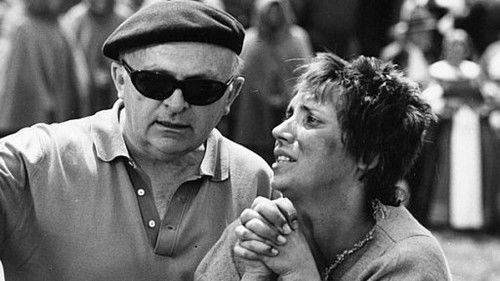
In 2008, he ended his fifty-year lasting teaching career, even then he didn’t resign from the idea of another film. First film, The Light Penetrates the Darkness (Světlo proniká tmou), he made as a twenty-year young man in 1931 and since then there have been countless films made by him, feature films and documentaries. He worked in his adult life in all regimes, often as the first and always perfectly prepared director and as a screenwriter. There is no more controversial figure among Czech directors – the creator rising so many exciting emotions, who in the same time made so many key shots in the Czech cinematography. And who as a demanding teacher brought up so many students, his future competitors. He himself in contact with them also recovered, as evidenced by his movies Golden Queen (Zlatá reneta, 1965), Romance for Bugle (Romance pro křídlovku, 1966), The Thirteenth Chamber (Třináctá komnata, 1968) and Witches’ Hammer (Kladivo na čarodějnice, 1969).
Juraj Herz
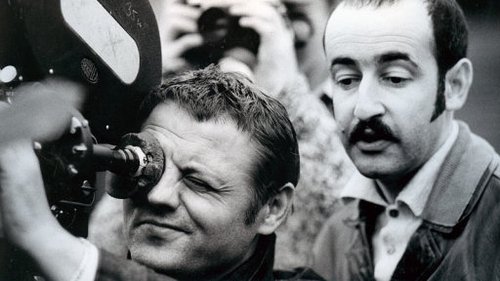
This 2009 documentary on Juraj Herz features in-depth interviews and copious clips from the director's work. Interview subjects include film-world luminaries Miloš Forman, Věra Chytilová, Miroslav Ondříček, Otakar Vávra, and more.
Miroslav Ondříček
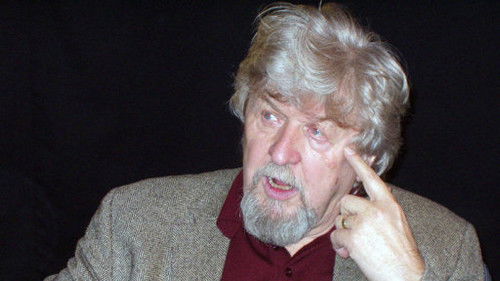
He has twice been nominated for an Oscar for the camera in movies Ragtime (1981) and Amadeus (1984), in both cases it was a near thing. Yet no one doubts that he is one of the world’s prominent directors of photography. Since the mid- sixties, however, he stood behind the camera not only in famous films of Miloš Forman, but also of Ivan Passer, Jan Němec, Lindsay Anderson and George Roy Hill. He still believes in the power of cinematic storytelling with light and shadow, and he is attempting to inspire with his beliefs his students at the Film Academy named after Miroslav Ondříček in Písek.
Věra Chytilová
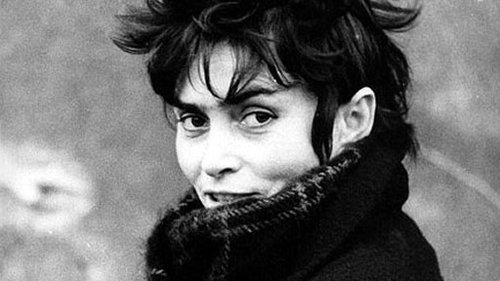
Originally a student of architecture, then a draft person, laboratory technician, model, a film extra, script assistant, assistant director, student of FAMU with Otakar Vávra, and, finally a film director with more than half a century of active career as a filmmaker, agile and almost unbearably provocative, she has always gone to the Ceiling (Strop, 1961) of human possibilities and has almost always made Something Different (O něčem jiném, 1963) than her colleagues. With her uncompromising ways as to the artistic and civilian requirements as well as her in advocating the right to one’s own opinion she was provocative during the past regime (The Daisies /Sedmikrásky/ 1966; The Apple Game /Hra o jablko/, 1976) and cause public displeasure even today (The Traps /Pasti, pasti, pastičky/, 1998; Pleasant Moments /Hezké chvilky bez záruky/, 2006). She is also a mother of two children, a grandmother, and a recipient of lifelong attention.
Albert Marenčin
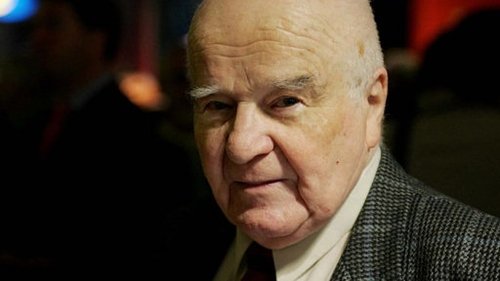
One of those whose creativity was for long sacrificed for the work of others. After studying in Paris he began operating in Czechoslovak national film in Bratislava already in 1948. Since the early sixties, he has won recognition as a stage director of Na Kolibě do života, in films made by Štefan Uher, Stanislav Barabáš, Martin Hollý, Peter Solan and Eduard Grečner, and later in films by Juraj Jakubisko, Dušan Hanák, Elo Havetta, Leopold Lahola and Alain Robbe-Grillet. This way he helped creating the modern Slovak cinema – which earned him “a throw away” from the film industry in 1972. Later, anchored in the Slovak National Gallery, he has published on his own, also abroad. After November 1989 he utilizes his experience in a number of commemorative and reflexive texts and publications.
Hynek Bočan
He had encountered film as a fifteen year old boy in Jiří Sequens’ Lead Bread (1953) in which he had a bigger part than the later star actress Jana Brejchová. Today a prominent creator of classic television series begun with bitter probes into the Czech soul (for example Honor and Glory, 1968), which earned him several years of work restriction. He could not resume work until 1974 and gradually he made a series of comedies and dramas for movie theatres and television. After November 1989 he returned to the topics of the writer and screen writer Jiří Stránský, which they had been working on together already in the sixties: the most effectively in the story from the Stalinist camp, The Boomerang (1996), the most extensively in the multivolume series Wild Country (from 1997).
Ladislav Helge
Social issues presented to him, as a film director, always more than an artistic concept, politics meant more to him than poetics. Right after his feature debut School of Fathers (Škola otců, 1957) he established himself at the forefront of the reform efforts of cinematography after the “thaw” of 1956, soon, however, he was hit by the payoff of the regime in the form of censorship restrictions Great Solitude (Velká samota, 1959). He fell into a creative uncertainty and found his filmmaker’s image again only 10 years later, in a merciless analysis of a mentality of functionaries Shame (Stud, 1967). His active civilian participation in the renewal rejuvenation process in 1968 definitely took him out of cinematography. After the Soviet occupation he was fired from Barrandov, making his living as an office clerk and returned to his profession only within the framework of the programs of Laterna Magika theatre in the eighties.
Similar Shows
Shows like this one




Recommended for You
Based on this series