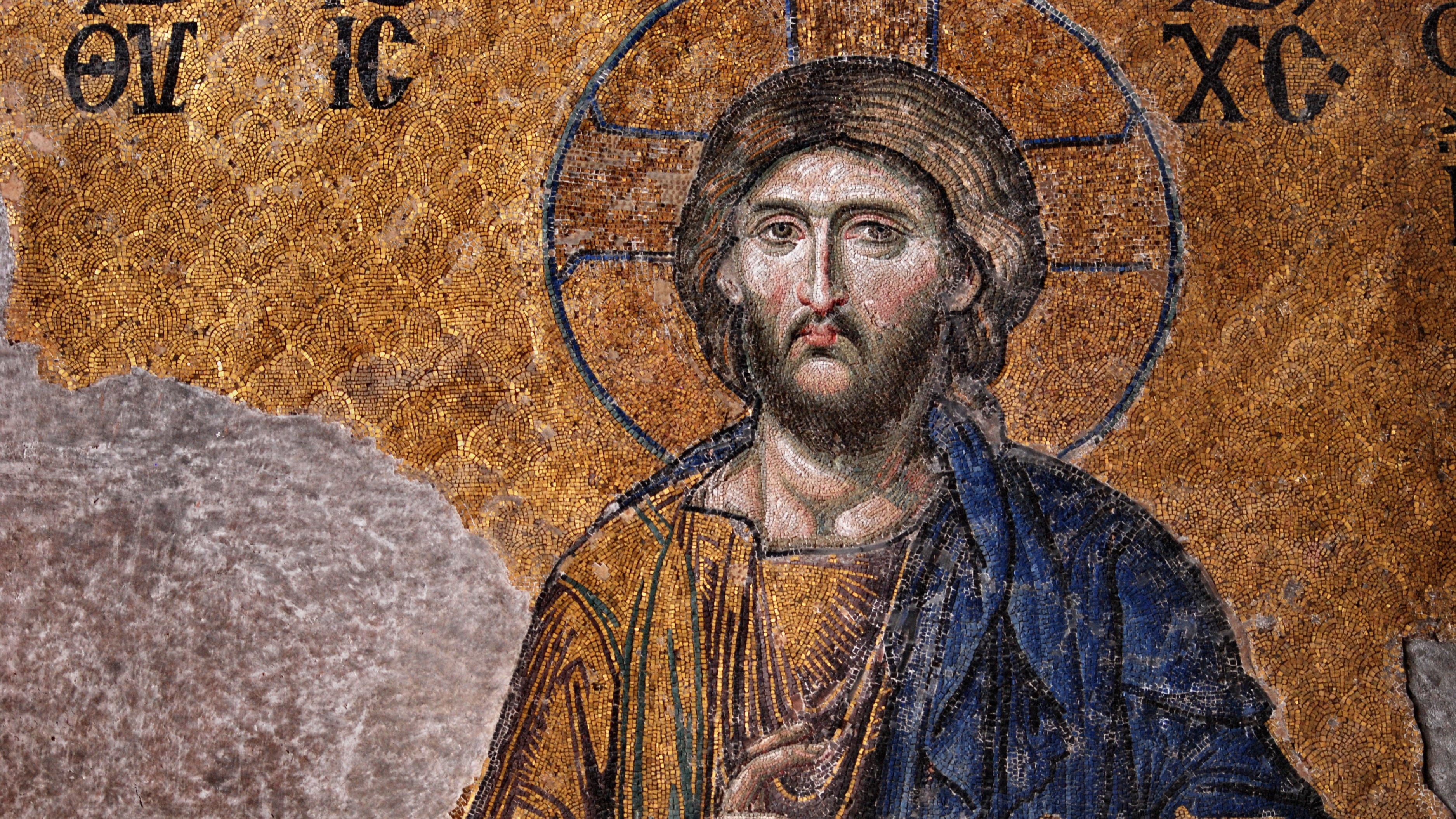

About
Yale Courses - This course approaches the New Testament not as scripture, or a piece of authoritative holy writing, but as a collection of historical documents. Therefore, students are urged to leave behind their pre-conceived notions of the New Testament and read it as if they had never heard of it before. This involves understanding the historical context of the New Testament and imagining how it might appear to an ancient person.
Seasons
Episodes
Season 1
Introduction: Why Study the New Testament?
This course approaches the New Testament not as scripture, or a piece of authoritative holy writing, but as a collection of historical documents. Therefore, students are urged to leave behind their pre-conceived notions of the New Testament and read it as if they had never heard of it before. This involves understanding the historical context of the New Testament and imagining how it might appear to an ancient person.
From Stories to Canon
The Christian faith is based upon a canon of texts considered to be holy scripture. How did this canon come to be? Different factors, such as competing schools of doctrine, growing consensus, and the invention of the codex, helped shape the canon of the New Testament. Reasons for inclusion in or exclusion from the canon included apostolic authority, general acceptance, and theological appropriateness for "proto-orthodox" Christianity.
The Greco-Roman World
Knowledge of historical context is crucial to understanding the New Testament. Alexander the Great, in his conquests, spread Greek culture throughout the Mediterranean world. This would shape the structure of city-states, which would share characteristically Greek institutions, such as the gymnasium and the boule. This would also give rise to religious syncretism, that is, the mixing of different religions. The rise of the Romans would continue this trend of universalization of Greek ideals and religious tolerance, as well as implement the social structure of the Roman household. The Pax Romana, and the vast infrastructures of the Roman Empire, would facilitate the rapid spread of Christianity.
Judaism in the First Century
Of the four kingdoms that arose after Alexander's death, those of the Seleucids and the Ptolemies are most pertinent to an understanding of the New Testament. Especially important is the rule of Antiochus IV Epiphanes, who forced the issue of Hellenism in Jerusalem by profaning the temple. Jews were not alike in their reaction to Hellenization, but a revolt arose under the leadership of the Mattathias and his sons, who would rule in the Hasmonean Dynasty. After the spread of Roman rule, the Judea was under client kings and procurators until the Jewish War and the destruction of the temple in 70 CE. Revolt was only one Jewish response to foreign rule; another was apocalypticism, as we see in Daniel and also in the Jesus' teaching and the early Christian movement.
The New Testament as History
The accounts of Paul's travels in The Acts of the Apostles and Galatians seem to contradict each other at many points. Their descriptions of a meeting in Jerusalem--a major council in Acts versus a small, informal gathering in Galatians--also differ quite a bit. How do we understand these differences? A historical critical reading of these accounts does not force these texts into a harmonious unity or accept them at face value. Instead, a historical critical reading carefully sifts through the details of the texts and asks which of these is more likely to be historically accurate.
The Gospel of Mark
The Gospels of the New Testament are not biographies, and, in this class, they are read through a historical critical lens. This means that the events they narrate are not taken at face value as historical. The Gospel of Mark illustrates how the gospel writer skillfully crafts a narrative in order to deliver a message. It is a message that emphasizes a suffering messiah, and the necessity of suffering before glory. The gospel's apocalyptic passages predict troubles for the Jewish temple and incorporate this prediction with its understanding of the future coming of the Son of Man.
The Gospel of Matthew
The Gospel of Matthew contains some of the most famous passages that both Christians and non-Christians are familiar with. However, Matthew also presents itself paradoxically as preaching a Torah observant Christianity and a Christian mission that seeks to reach gentiles. The figure of Jesus in Matthew is that of a teacher, the founder of the Church, and the model for the apostles and Matthew's own community. Matthew seems to be writing for a church community that needs encouragement to have faith in a time of trouble.
The Gospel of Thomas
We have known of the existence of the Gospel of Thomas from ancient writers, but it was only after the discovery of the Nag Hammadi Codices that the actual text became available. The Gospel of Thomas is basically a collection of sayings, or logia, that sometimes seem similar, perhaps more primitive than sayings found in the canonical Gospels. Sometimes, however, the sayings seem better explained as reflecting a "Gnostic" understanding of the world. This involves a rejection of the material world and a desire for gnosis, a secret knowledge, in order to escape the world and return to the divine being.
Similar Shows
Shows like this one





Recommended for You
Based on this series