

About
Learn useful phrases and cool kanji through these 15-minute programs, and you'll realize that "Japanese is easy!"
Episodes
Season 1

Basic sentences: A is B (Part 1)
"Next is Ueno Station", in Japanese is "Tsugi wa Ueno desu". Ending a sentence with "desu" is a basic pattern, so how about using this pattern in various situations, and taking the first step towards communicating in Japanese?

Basic sentences: A is B (Part 2)
When saying "My name is Tanaka", in Japanese, after the part that means "My name", we put "wa" particle. If the other person's name is also Tanaka, "wa" particle replaces "mo" article. Mastering this rule can take your Japanese one step further.
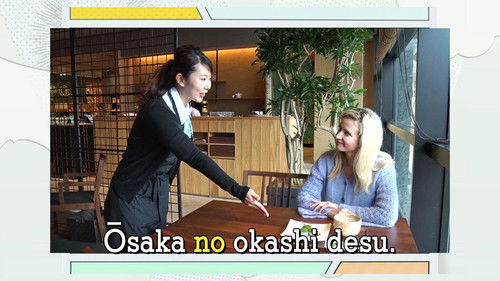
Talking about ownership
Today, we will focus on "no", the article used between 2 nouns. By saying "A no B", you're saying that A owns B. When the video is over, you'll learn various expressions that have "no" article.

Expressing your impressions or feelings
Today, we'll learn how to express our impressions or feelings by using adjectives such as "oishii" (tasty), "kireina" (beautiful), "shizukana" (quiet or calm) and so on. In the Phrase-easy segment, we'll introduce "Itadakimasu", the phrase we say before meals.

Words like this, that, and it
In this episode, we'll focus on "kore", "sore" and "are", 3 words that correspond to "this", "it" and "that". We'll learn the basic usage of these words, and then move on to "dore", a word used to ask about one item among several.

Past sentences (Part 1)
In this episode, we'll learn the word "deshita", which refers to the past. This word helps us to share our personal experiences with others. We'll also learn the word "daijobu", one of the most commonly used words in daily Japanese conversations.

Past sentences (Part 2)
In this episode, we'll focus on "deshita", a word we can use when expressing past feelings or impressions. We'll also look at a common sentence pattern: na-adjectives + "deshita".

Negative sentences
In this episode, we'll focus on the negative form of adjectives. For example, the phrase "oishi desu", meaning "(It) is delicious", becomes "oishiku nai desu", meaning "(It) is not delicious".
Similar Shows
Shows like this one






Recommended for You
Based on this series