About
Series of programmes about psychology, in which Jonathan Miller talks to eminent psychologists about their theories and beliefs.
Cast
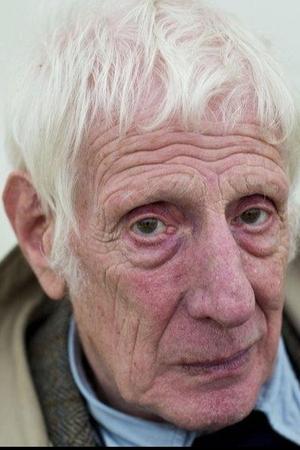
Jonathan Miller
as Self - Presenter
Seasons
Episodes
Season 1
George Miller
Professor George Miller, from Princeton University, explains what psychology is, what psychologists do, and the importance of the Second World War to the study of human behaviour.
Jerome Bruner
Professor Jerome Bruner, from the New School for Social Research in New York, explains how the study of the 'mind', once a dirty word in psychology, has revolutionised the exploration of our mental lives. He also discusses insights into the growth of the infant mind and describes some of his own work with children.
Richard Gregory
Until the present century vision was often regarded as a simple process - the eyes provide the brain with pictures of the outside world, and the brain just looks at them. We now know that visual perception is one of the most complicated functions that the human brain performs. Professor Richard Gregory, from the University of Bristol, shows how the study of illusions has demonstrated how much of what we see ' out there' is actually generated from within.
Daniel Dennett
Until recently psychologists shunned questions about the philosophy of 'mind' in the belief that they were tedious and unanswerable. Professor Daniel Dennett , from Tufts University in Boston, describes how the study of computers and artificial intelligence has helped philosophy and psychology to enjoy a more fruitful relationship.
Stuart Hampshire
One of Sigmund Freud's most important contributions to psychology was the notion of an unconscious mind which can guide our behaviour in curious and unexpected ways. This has not only given rise to a whole new branch of psychiatric treatment - psychoanalysis - but has transformed the way in which people think about .themselves and their actions. Stuart Hampshire, Warden of Wadham College, Oxford, discusses the significance of Freud's 'discovery'.
Jerome Fodor
In the 18th century it was assumed that the mind was 'transparent to itself '- that everything occurring in the brain was available to conscious thought. This idea seemed much less plausible after Freud introduced the notion of an unconscious mind housing 'dangerous' thoughts and desires. Modern psychology, though, has introduced another picture of unconscious mental processes, which has nothing to do with conflict, guilt or repression, but without which it is almost impossible to account for some of our distinctively human abilities, such as language. Professor Jerome Fodor, from the Massachusetts Institute of Technology, discusses how this other non-Freudian unconscious might be organised, and how it relates to our conscious thinking.
Norman Geschwind
Information not available.
George Mandler
For most people the expression of such feelings as fear, anger, jealousy or love forms an important part of human life. It is now recognised that psychologists have paid little attention to these fundamental human experiences. George Mandler, Professor of Psychology at the University of California, offers a new approach to the understanding of the emotions.
Similar Shows
Shows like this one










Recommended for You
Based on this series